-
 Learn More: ON! The Beginnings of the Electric Sound Generation
Today’s stringed instruments, soundboards, and organs often rely on electric energy and circuitry in the generation, control, and manipulation of electronic sounds and tones, and in the production of special effects. Such usage of electric power was unthinkable, however, until the end of the 19th century when innovators such as Thaddeus Cahill and Leon Theremin…
-
 Learn More: The Magic & Mystery of Slide Guitar
Many stringed instruments, ancient and modern, are played using a “slide” technique which allows musicians to make continuous transitions in pitch by sliding their fingers—or pieces of glass, bone, stone, ivory, metal or other materials—across the strings at the neck of the instrument. At the end of the 19th century this technique made a bold…
-
 Learn More: The Ukulele & You
“A Tradition in Hawaiian Music: The ‘Ukulele,” perhaps the earliest modern exhibit of historic ukuleles, was mounted at the Bernice P. Bishop Museum at Honolulu, Hawaii in 1980 to commemorate the one-hundredth anniversary of the arrival of the Madeiran craftsmen who made the first “jumping fleas” in the Islands. Featuring instruments from the collections of…
-
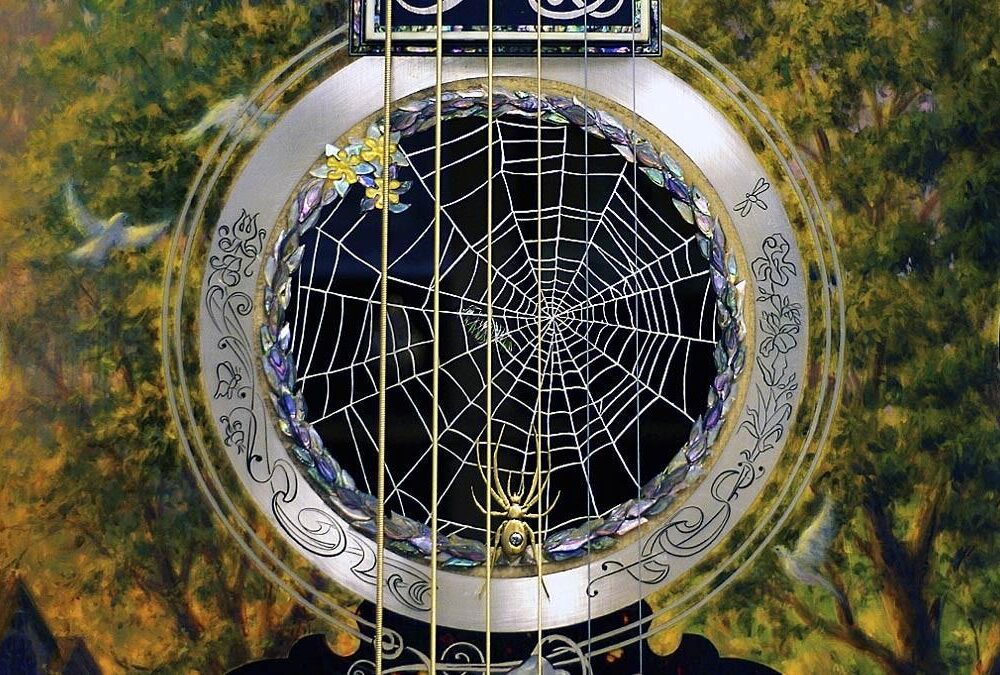 Learn More: Visual Voices
In its simplest definition, inlay is the decorative process of gluing shell, metal, stone, tusk, and other materials into a cavity hollowed from a surface. It is an ancient practice; the earliest known inlaid object is from Mesopotamia, around 3000 BC. In recent centuries, artists have applied inlay to musical instruments, adding visual aesthetics that…
-
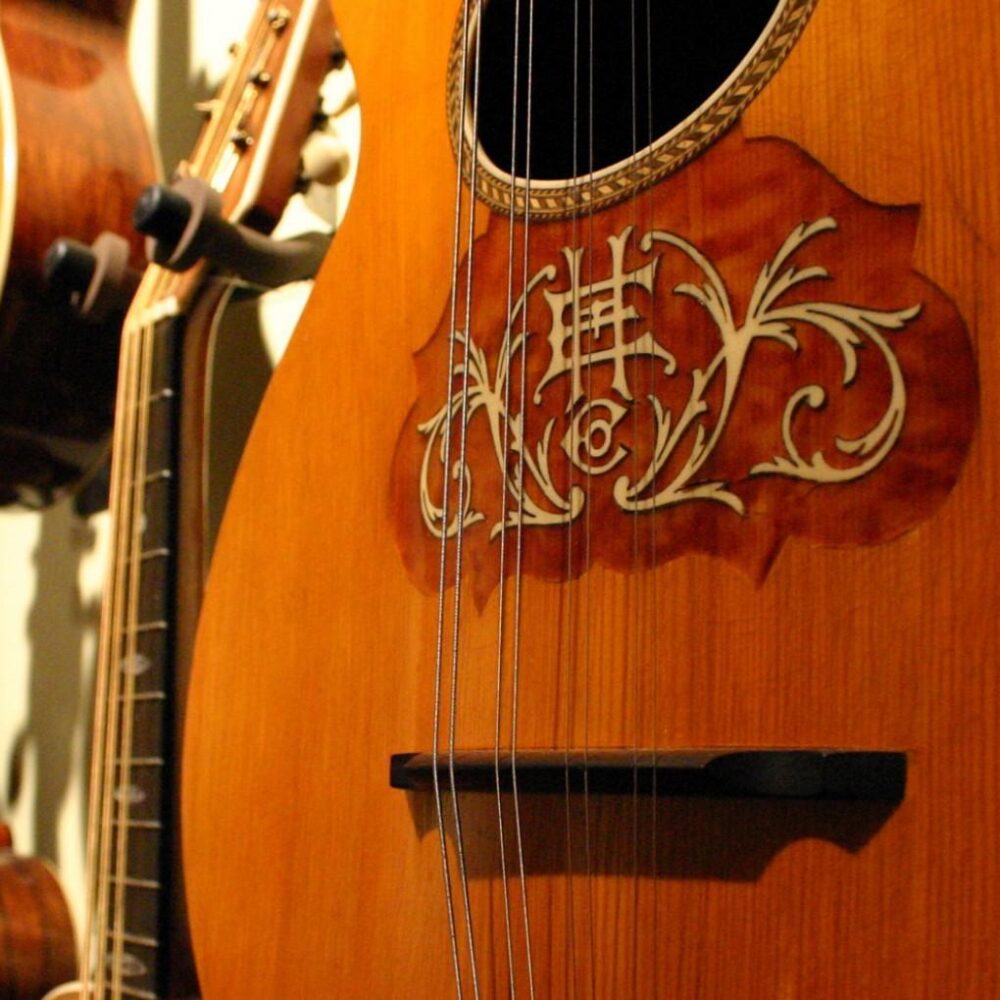 Learn More: Howe-Orme: Forgotten Voices Remembered
The Howe-Orme instruments were manufactured for a relatively short time from 1897 until about 1910 but many have survived to this day and are becoming highly valued. The secret to the sustained appreciation of these instruments is in the high quality of their craftsmanship and construction, and in their very impressive visual appearance expressed through…