
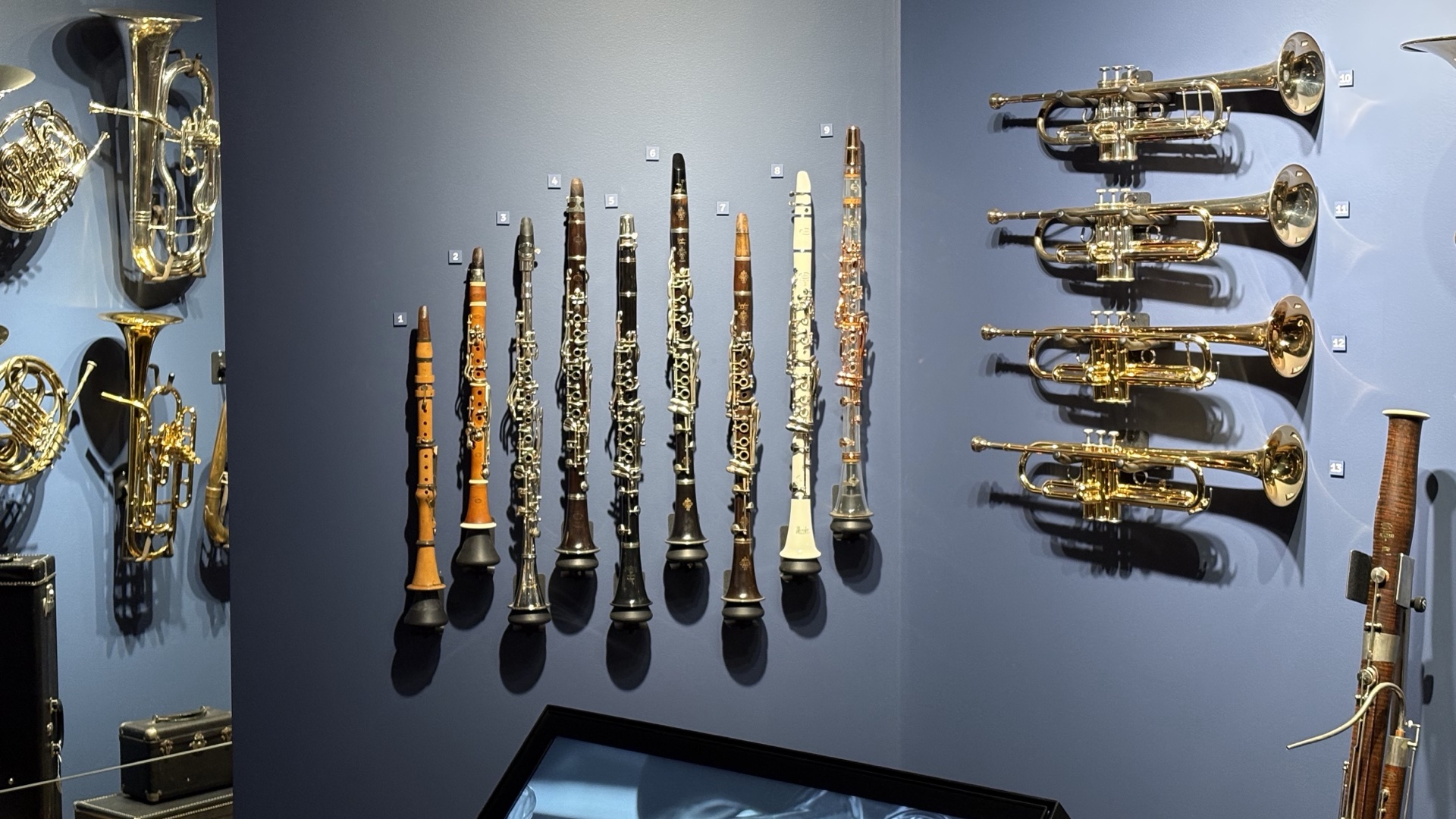
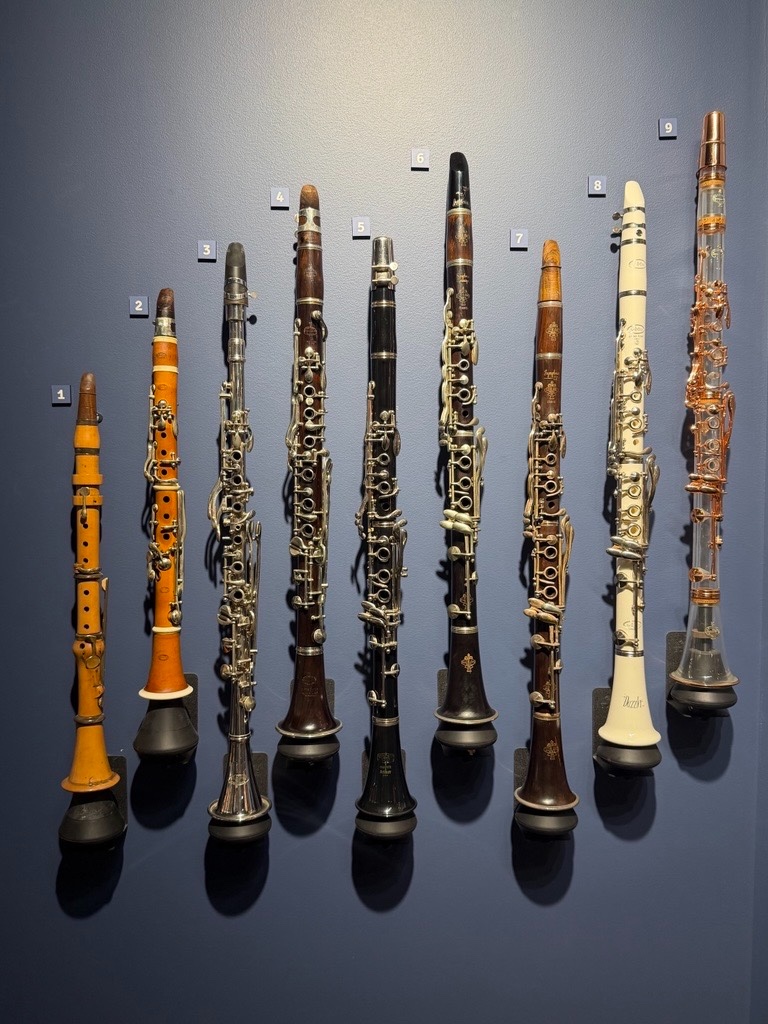
We recently received an artifact donation that gave us the opportunity to update our clarinet display with a more complete history of the instrument. The clarinet is a familiar favorite for musicians and music lovers alike, but the modern clarinet we know today is a relatively recent invention.
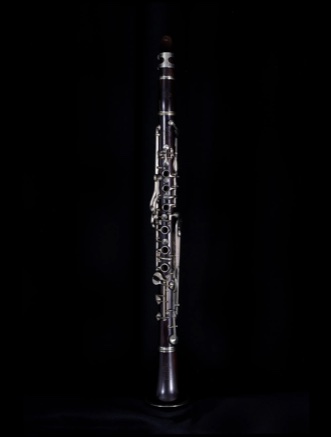
The modern clarinet began with the chalumeau, a single-reed woodwind instrument with a limited range of about an octave and a half. In the early 18th century, German instrument maker Johann Christoph Denner added a register key, expanding its range and versatility. This innovation helped establish the clarinet as a popular instrument in European orchestras and ensembles. As a representative of an early clarinet, we now have our oldest artifact in the collection on display, a clarinet from circa 1760.
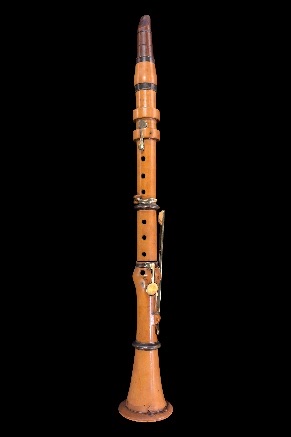
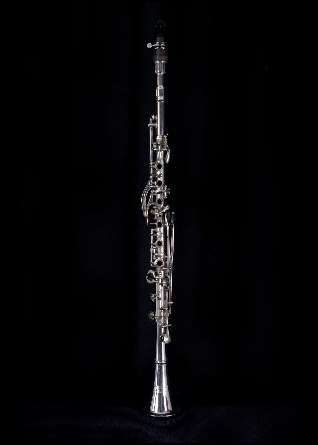
Early clarinets were commonly made from boxwood, valued for its durability and fine grain. Over the 19th century, new key systems, including the Müller, Boehm, and Albert systems, improved the instrument’s intonation and expanded its technical capabilities.
The 20th century brought even more experimentation. Manufacturers explored materials such as metal, ebony, grenadilla, cocobolo, and acrylonitrile butadiene styrene (ABS) plastic, each offering different qualities in durability, appearance, and sound.
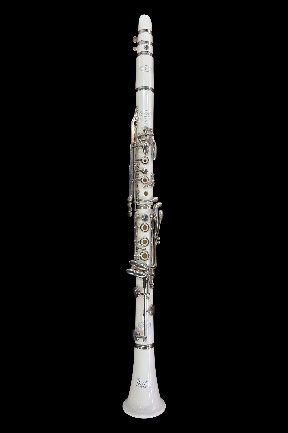
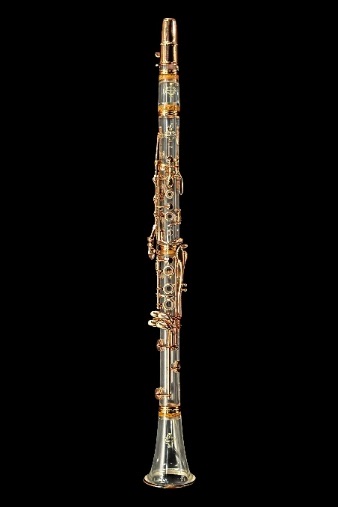
One particularly unique example is the Buffet B12 B♭ clarinet, featuring a clear Lucite body and rose-gold-colored keys. This instrument was gifted to the museum in late 2026. The B12 earned a reputation for its accessible playability, with a responsive design and thoughtfully arranged keywork that made it a favored instrument among beginning musicians.
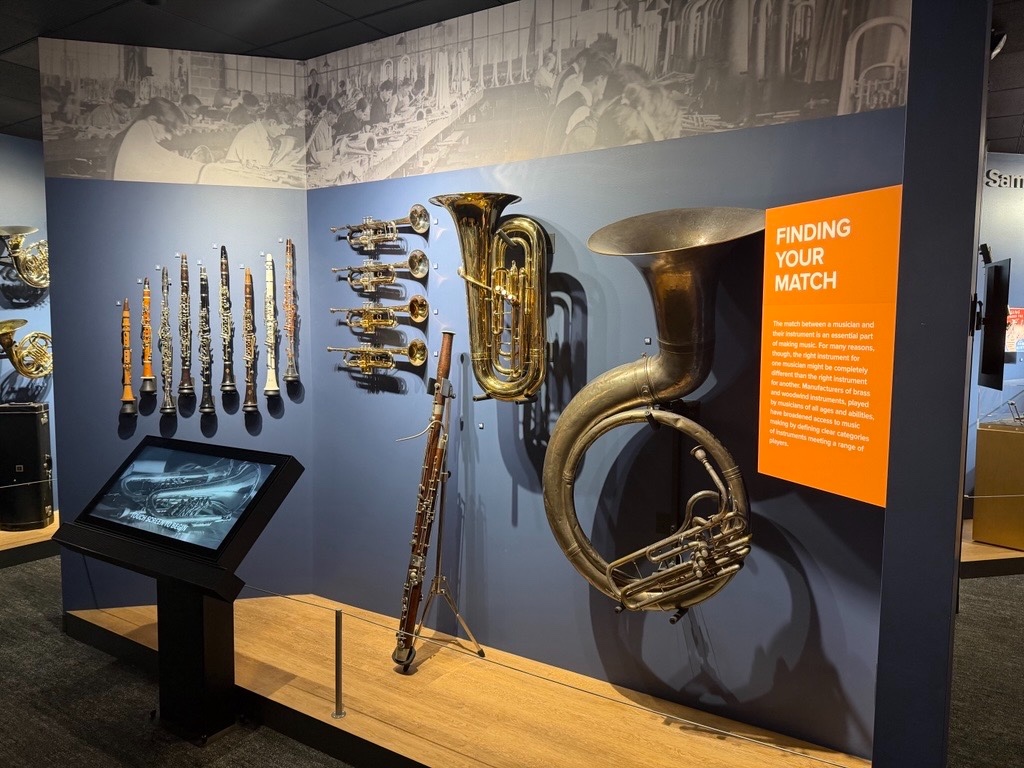
Clarinets remain diverse and serve as a versatile solo or ensemble instrument. We invite you to come explore the history of the clarinet and discover even more interesting instruments in our Finding Your Match display.
1 Gift of Larry R. Linkin
2 On loan from the family of Robert M. Snyder III (Play it again, Bob!), in loving memory
3 Gift of Buffet Crampon to Larry Linkin, donated to the Museum of Making Music in memory of Larry Linkin