Going Beyond the Instruments
This month, we are installing a new exhibition that reexamines the role of musical instruments, especially the way they transcend their original purpose of making music. Rather than viewing instruments as static objects, our goal is to present them as works of art, technological innovations, lifelines, and symbols of cultural change.
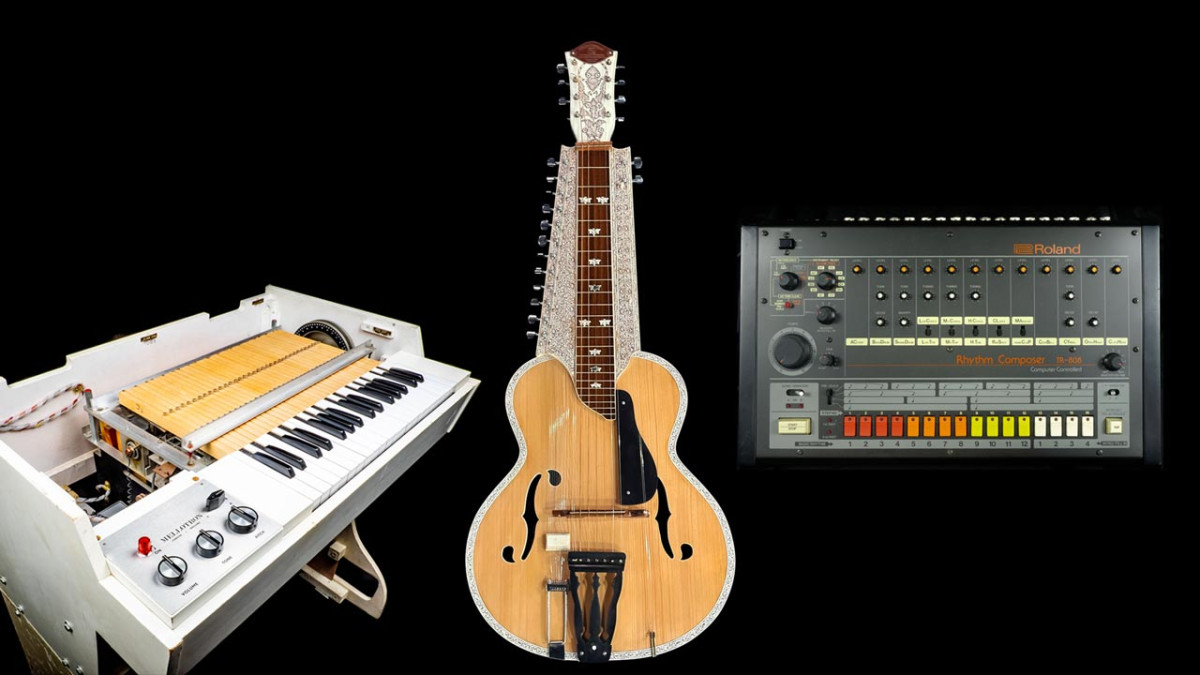
Consider the Roland TR-808 drum machine, for example. Without its creation, would hip-hop and electronic dance music sound the same today? The TR-808 democratized music production, allowing artists to create powerful, bass-driven tracks without access to live drummers or expensive studios, fueling the rise of independent beat-making and shaping the sound of hip-hop, trap, and modern pop. When Debashish Bhattacharya imagined an instrument that blended the Rudra-veena, violin, sarod, and sitar, he created the Chaturangui, expanding the expressive capabilities of Indian classical music. And without the Mellotron, the iconic opening of Strawberry Fields Forever by The Beatles would not be the same. By allowing musicians to play pre-recorded orchestral sounds from a keyboard, the Mellotron transformed rock and pop and introduced the concept of sampling decades before digital technology.
These artifacts demonstrate that from the minds of instrument makers and into the hands of creative spirits, instruments do far more than create melodies and rhythms. They spark movements, strengthen communities, and influence generations.
Although the exhibition organizes these instruments into categories, they are not confined by them. Many of these instruments cross boundaries and inhabit multiple meanings at once. We welcome you to visit and experience this exhibit as a place for discovery and an opportunity to forge personal connections and interpretations of the instruments that have shaped our world.